
Most of the industries are now moving towards cleaner and efficient energy systems. But the one question that still exists is how does a fuel cell work? A fuel cell is the power behind everything from electric vehicles to home backup energy systems. By understanding the overall fuel cell working process, including how does a fuel cell work step by step, we can design better fuel cell systems, but a greater appreciation can also be developed. At TMNetch, we create precision-engineered fuel cell components.
What Is a Fuel Cell?
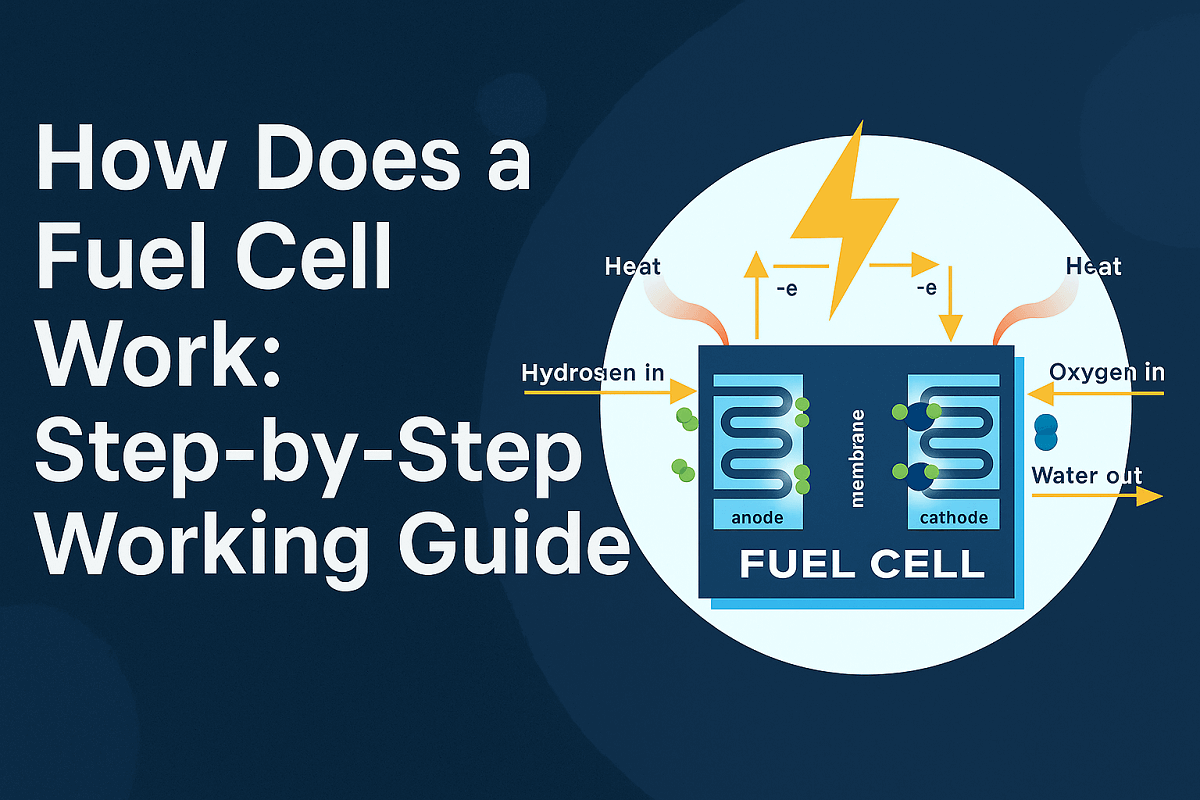
A fuel cell is basically an electrochemical device used to convert chemical energy into electrical power. It is quite similar to a battery in some ways, but there are quite a few key differences. Firstly, a fuel cell never runs dry until there is fuel to run on. Secondly, instead of storing chemical energy inside, like batteries, a fuel cell generates it. The working principle of fuel cell is to combine hydrogen and oxygen to produce electricity, water, and heat. In other words, the hydrogen mixture goes to the anode side through the working process of a fuel cell to generate electricity, which provides electrons to the other side, the cathode. These electrons travel through a wire, circuit, or device that generates additional power through an electric current.
How Does a Fuel Cell Work Step by Step
To understand how does a fuel cell work, let’s break it into clear steps that explain the fuel cell working process in sequence.

1. Hydrogen Supply to the Anode
To start the fuel cell working process, hydrogen gas is passed over the anode, where a platinum-based catalyst splits a hydrogen molecule into protons and electrons. This whole situation happens inside a fuel cell. This is a crucial part of the working principle of fuel cell. A high standard of platinum catalyst and an even flow must be given to ensure that the fuel cell working process.
2. Electron Flow
The separated electron is trapped by the electrolyte membrane, where it cannot pass through it. But it can pass through the external circuit. This situation generates an electric current. This is another fundamental part of the fuel cell working process. This whole working process answers how does a fuel cell work step by step to generate clean, efficient electricity.
3. Proton Transport
Meanwhile, the separated protons passed through the membrane to travel over the cathode, which is towards the power-generating cathode. The membrane only allows protons to pass through it, ensuring a clean separation of charges. This passage of charges is important as the working process of a fuel cell to generate electricity and keeps the fuel cell working flow in check.
4. Oxygen Reaction at Cathode
The final component is oxygen from the air. Arriving protons, along with the electrons conducted from the anode, react to form water molecules. This action at the cathode concludes the working principle of fuel cell and the chain reaction to create usable energy for various purposes. Water should not be collected in abundance to maintain long-term stability of the system.
5. Water and Heat Formation
The resultant products in this process will be high-purity water and heat. Water, in the form of vapor, is released, and heat can be re-utilized to control temperature or for other secondary uses. Such an understanding of how does a fuel cell work step by step, provides good reasoning on why the system is considered one of the prime solutions for renewable, clean energy. Efficient, sustainable, and emission-free, these are the benefits offered by fuel cells for energy needs.
TMNetch specializes in etched bipolar plates that perform by regulating this whole fuel cell working process, ensuring that high-performance energy systems benefit from proper flow distribution, corrosion resistance, and consistent electrical conductivity.
Components Involved in the Working Process of a Fuel Cell
Each component has a specific role in how does a fuel cell work and enhances energy efficiency:

- Anode: The catalyst-coated component is where hydrogen divides into protons and electrons.
- Cathode: The part is responsible for an oxygen reduction reaction and water creation.
- Polymer or Other Type of Membrane: Conducts protons while limiting electrons to ensure a charge balance.
- Bipolar Plates: The part distributes gases evenly performs the electrical current; bipolar plates that are etched by TMNetch can improve the fuel cell working process through the structural durability and more even gas flow distribution.
- Gas Diffusion Layers: It enables a more efficient design by managing hydration, gas transport, and the reaction process.
Elements outline the working process of a fuel cell to generate electricity in a more efficient manner.
Types of Fuel Cells Based on Working Principle
Working principle of fuel cell do not vary in terms of the production of hydrogen and oxygen, but the specific mechanism may differ slightly based on the best material for the electrolyte.
1. Proton Exchange Membrane Fuel Cell

- The operating mechanism is simple but enabling the ability to run at a lower temperature range.
- It is primarily used in vehicles and other devices with lower energy demands.
- At TMNetch, special plates with more effectively etched gas channels can be acquired for improved fuel cell working process and ensuring overall durability and strength of plates.
2. Solid Oxide Fuel Cell

- It operates at a higher temperature range
- Primarily used in stationary power generation.
- Oxygen ions pass through a ceramic electrolyte due to the working process of a fuel cell to generate electricity.
3. Alkaline Fuel Cell

- The mechanism relies on an alkaline electrolyte like potassium hydroxide
- Commonly used in aerospace applications.
- The ion reactions occur at a higher rate due to this variation to ensure a faster generation of electricity.
Benefits of Fuel Cell Technology
A closer look at how does a fuel cell work and its resulting advantages is as follows:
- High Efficiency: Chemical energy is converted directly into electrical energy. Therefore, minimal loss is incurred in the fuel cell working process.
- Clean Emissions: The only byproducts are heat and water vapor. Therefore, the working principle of fuel cell is environmentally friendly.
- Quiet Operation: There is no mechanical movement. Thus, the fuel cell working process does not produce noise.
- Continuous Power Supply: Electricity is produced as long as fuel is supplied. The working process of a fuel cell to generate electricity is stable.
- Scalability: Small portable systems to large industrial plants can all function according to the working process of a fuel cell to generate electricity.
TMNetch precision etched components, combined with the working process, provide improved gas distribution, durability, and efficiency in every model design.
Applications of Fuel Cells
The versatility of how does a fuel cell work makes it suitable for various sectors:
- Automotive: The fuel cell working process is used to provide electricity to power hydrogen fuel-cell electric vehicles.
- Industrial Energy: The working principle of fuel cell provides backup power, running on the principle of a fuel cell to generate electricity. It can also function as a heat and energy provider as long as fuel is supplied and removed.
- Aerospace and Defense: The working process of a fuel cell to generate electricity is clean and reliable.
- Residential Use: Home units using electricity from the fuel cell working process are developed to be smaller in size.
- Portable Devices: Camping, drones, and off-grid power uses follow the how does a fuel cell work step by step.
Despite the varied uses, how does a fuel cell work remains the same. It is for these reasons that fuel cells are a turning point in modern electrical generation.
Why TMNetch for Fuel Cell Component Solutions
TMNetch is a leader in advanced etching and precision manufacturing. Our custom bipolar plates are designed to improve how does a fuel cell work step by step by enhancing conductivity, corrosion resistance, and flow uniformity. From proton exchange membrane stacks to advanced hydrogen fuel cell systems, TMNetch’s research and industry work depend on high-accuracy components that improve performance.

FAQs
Q1. What are the main parts of a fuel cell?
A fuel cell consists of an anode, a cathode, an electrolyte, bipolar plates, and gas diffusion layers. All of these components are vital for the fuel cell working process.
Q2. How does a fuel cell generate electricity?
The fuel cell working process involves an electrochemical reaction of hydrogen and oxygen, which produces current, heat, and water.
Q3. What is the efficiency of fuel cells?
Efficiency ranges from 40–60%, depending on the type and design. It is notably higher than in combustion systems due to the working process of the fuel cell.
Q4. Can fuel cells replace batteries?
Yes, in some cases. Continuous fuel cell working process allows it to supply power for a longer time than batteries.
Conclusion
Overall, knowing how does a fuel cell work gives an understanding of what to expect from clean energy in the future. The fuel cell working process, including how does a fuel cell work step by step, is a mixture of chemistry and engineering used to generate electricity in the most effective way. TMNetch’s support of this invention allows the working process of a fuel cell to generate electricity to be used in practice in a reliable and sustainable manner.